The floor
A live floor plan showing what is seated, what has fired, and what is still waiting.

RESTAURANT POINT OF SALE
A restaurant point of sale built around service rather than checkout. Reservations, floor plan, coursing, kitchen routing, and payment in one system, so the front and back of house are working from the same information.
A live floor plan showing what is seated, what has fired, and what is still waiting.
Orders routed by station, advanced with a bump bar, with modifiers arriving in full.
Online and phone orders entering the same queue instead of being re-keyed during the rush.
Tabs authorized up front, tips adjusted at close, and cash out from the same records.
TableTurn is a restaurant point of sale. It handles the room, the kitchen, and the payment in one place instead of three, which matters most during the two hours a night when everything is happening at once.
It is built for full service, quick service, pizza, and bar operations, and the configuration differs meaningfully between them. A fine dining room needs coursing and seat level ordering. A pizza operation needs build screens and delivery dispatch. A quick service counter needs speed above everything. Those are the same system set up differently, which is worth knowing before anyone shows you a demo built for somebody else's restaurant.
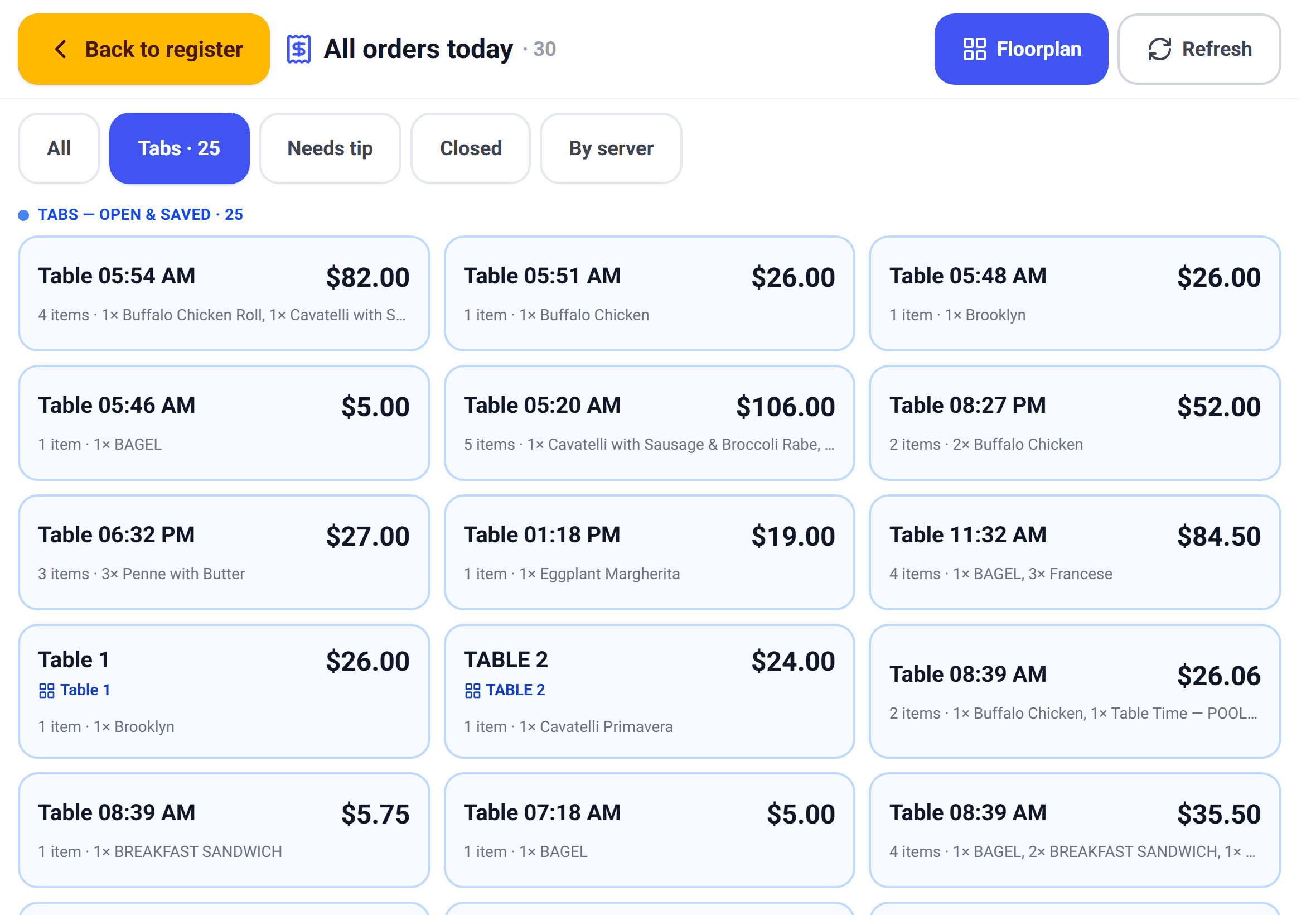
The floor plan is a working screen, not a picture. A manager can see which tables are seated, how long they have been there, which ones have been fired and which are waiting, and act on any of it without finding the server first.
Reservations live in the same place. Booking, finding an existing reservation, and seating a party happen against the same floor plan the room is being run from, so the host is not reconciling a book against a screen.
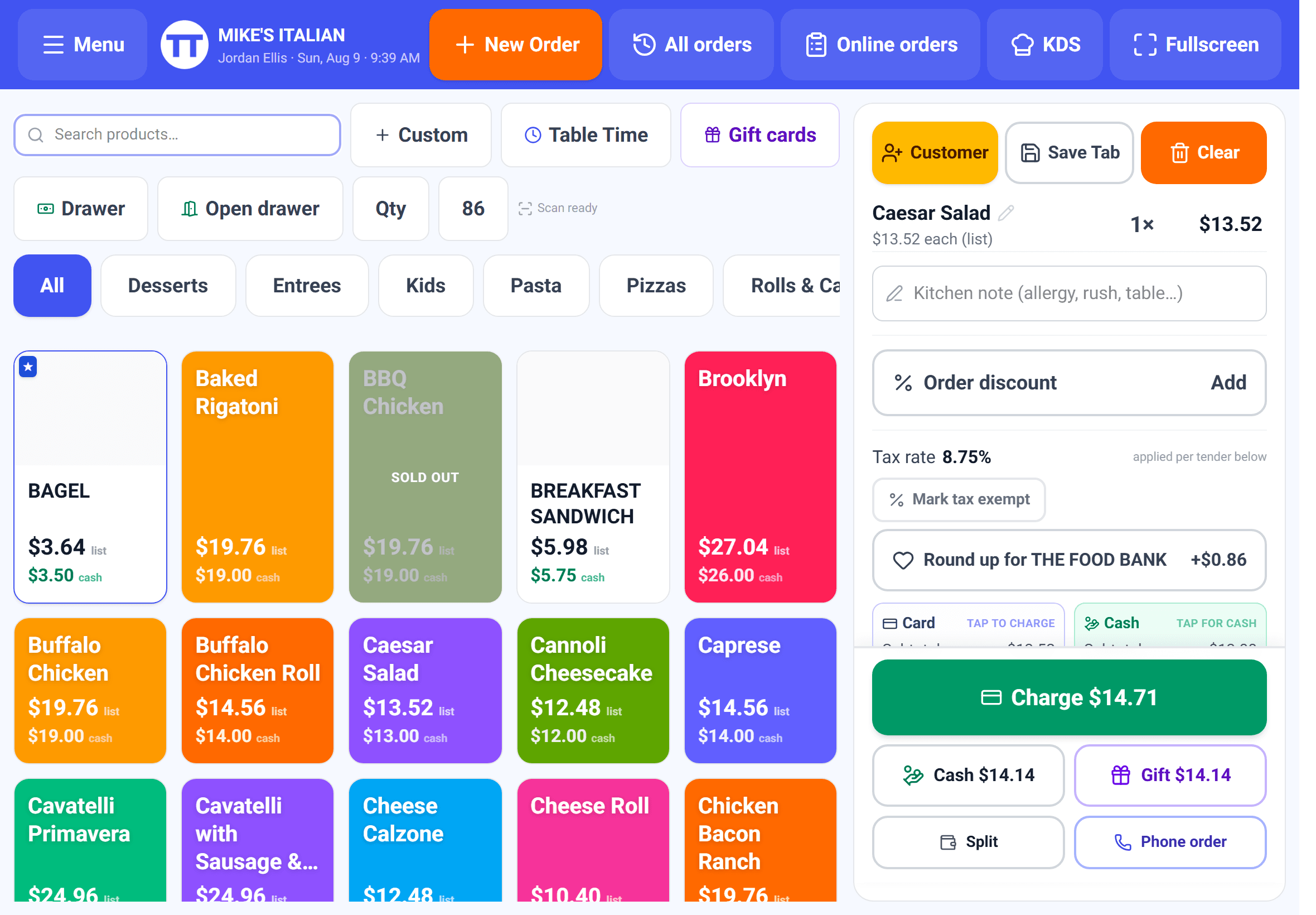
Orders are entered at the table on a handheld or at a station, seat by seat, so the runner knows where each plate goes without asking. Courses fire when someone decides they should, from the floor plan, rather than when a server happens to walk past the terminal.
Modifiers can be required rather than optional, which forces the order to be complete before it leaves the terminal. The line stops guessing about temperature, sauce, or a substitution, and the number of remakes drops for reasons that have nothing to do with the kitchen getting better.
Item availability updates in real time. When the kitchen runs out of something, it stops being sellable immediately, so servers are not promising a dish that ran out twenty minutes ago and then going back to the table to apologize.
Kitchen display screens replace printed tickets. Each part of an order routes to the station that makes it, so the grill and the pasta station are working toward one pickup time rather than independently.
Orders advance with a bump bar, which matters more than it sounds when the alternative is touching a screen with wet hands. Modifiers and allergen notes arrive in full rather than abbreviated onto a narrow ticket.
You also get timing data you did not have before. When an order was fired against when it was completed, by station, over a service. That is the number to look at when the complaint is that food is slow, because it usually tells you the problem is somewhere other than where everyone assumed.
Online orders enter the same queue as everything else, which removes the step where a staff member re-keys a tablet order into the register during the rush. That re-keying is where the errors come from, and the errors come back as remakes and refunds.
Phone orders pull up the caller's history and address, so a regular does not repeat their order or their directions every time.
Delivery has its own screen. Zones, assignment, and status in one place, so the person answering the phone can tell a customer where their order actually is rather than guessing.
Payment is part of the system rather than a separate terminal beside it, which means the amount is never keyed twice and the tip lands on the right ticket.
Bar tabs are authorized up front so the card goes back to the customer instead of accumulating in a stack behind the bar. Tips are adjusted against that authorization after the tab closes.
At close, server cash out and shift reconciliation run from the same records, so what each person owes at the end of a shift is not a negotiation.
Recipes tie menu items to ingredients, so selling a dish depletes what it is made from and your inventory reflects what actually happened during service rather than what someone counted last Sunday.
Employee management covers clocking in, permissions by role, and performance by shift. A new server does not need the ability to void a closed check, and setting that on day one is easier than revisiting it after something goes wrong.
Reporting runs by daypart, by server, by item, and by station. The useful reports are the unglamorous ones. What is not selling. Where voids concentrate. Which station is holding up the pass.
The same system, configured differently by service style.
Coursing, seat level ordering, and a floor plan matching the room.
Throughput first, with accuracy that holds up at volume.
Build screens, delivery dispatch, and phone orders with history.
Tab authorization, tip adjustment, and fast reconciliation at close.
A short queue, a customer facing display, and speed at the counter.
Reporting that consolidates and separates on demand.
Tell us how your room runs, what your menu looks like, and how much of your volume comes in off premise. We will tell you whether TableTurn fits and what the build would involve.