Close the residual gap
Cards on file with written consent, so the balance after adjudication is administrative rather than a collections problem.

HEALTHCARE
Between the provincial plan, private insurers, and the patient, the amount someone actually owes you is often unknown at the moment they are standing there. We advise on the payment side of that.
Cards on file with written consent, so the balance after adjudication is administrative rather than a collections problem.
Automatic reminders, and a cancellation policy your team actually enforces.
Patient financing on plans that get declined for cost rather than doubt.
Revenue reported by practitioner and by service, without a spreadsheet exercise first.
A retail transaction ends when the customer pays. Yours does not. A claim goes to an insurer, adjudication takes as long as it takes, and the balance that lands back on the patient is frequently different from what your front desk quoted them.
That creates the collection problem specific to healthcare. The patient was in your building, willing to pay, at a moment when nobody knew the number. By the time the number exists, they have gone home and your leverage is a statement in the mail.
Everything else on this page is some version of closing that gap, either by collecting sooner, by arranging in advance how the residual gets paid, or by making the amount predictable before the patient leaves.
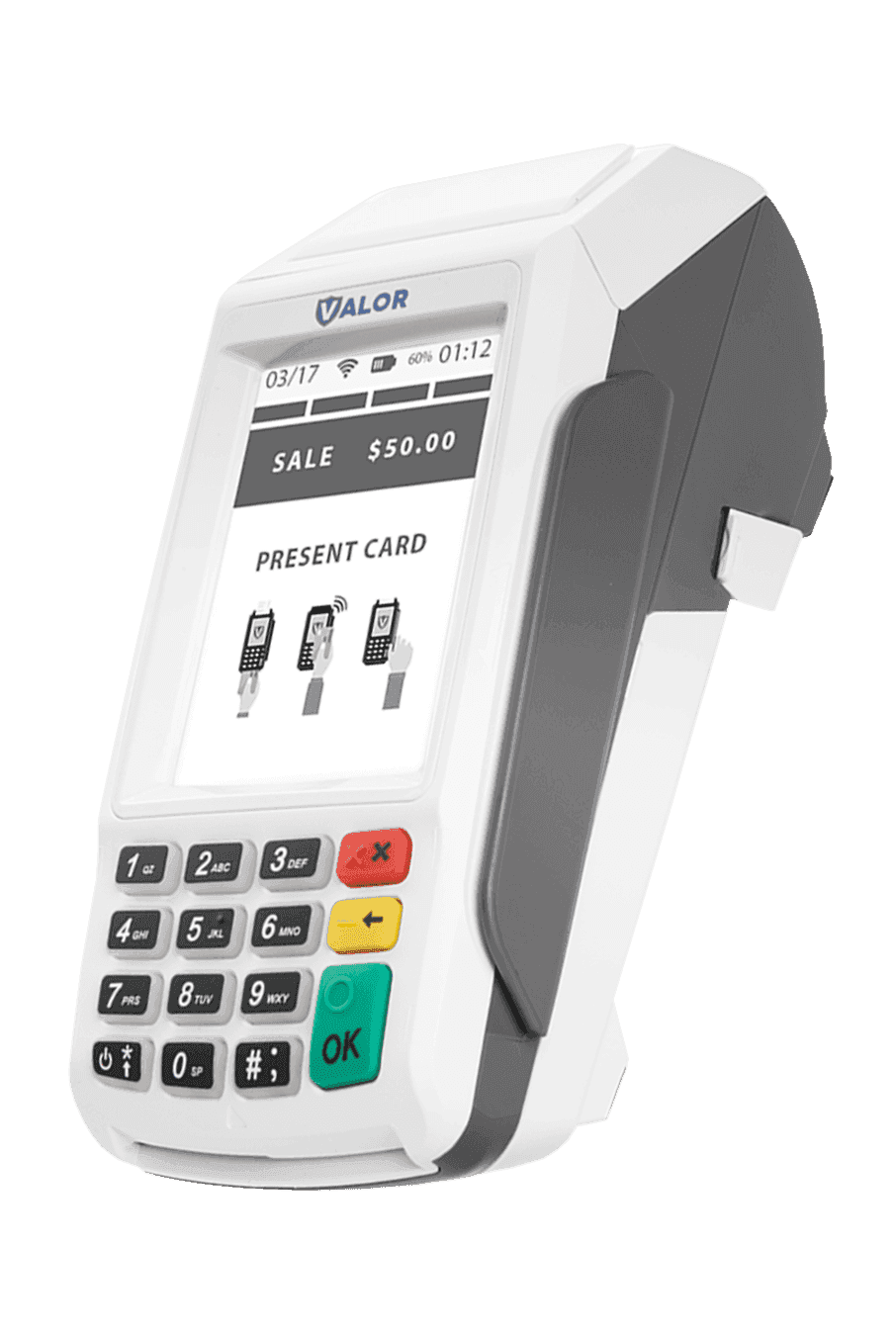
Your checkout counter is also your reception desk, your phone line, and your booking system. It is one person doing four jobs while somebody stands in front of them and somebody else waits behind.
That is the actual constraint on payment at a clinic, and it is why the setup matters more than it does in a store. Pulling up the right account, taking the payment, rebooking the next appointment, and sending a receipt should be one sequence rather than four applications.
For practitioners who work outside the clinic, mobile veterinary calls, home physiotherapy, in home nursing, the equivalent question is whether payment happens at the visit or becomes an invoice you chase afterward. Portable terminals settle that.

The cleanest solution to the residual balance is agreeing in advance how it gets paid. A card kept on file, with the patient's written consent and a clear statement of what will be charged and when, turns a collections problem into an administrative one.
The consent part is not a formality. The patient should understand what they signed, and your staff should be able to explain it in one sentence at the desk. If they cannot, patients dispute the charge later and they are not entirely wrong to.
Cards expire and get reissued after fraud. If nobody reviews the failed charges, balances quietly go uncollected for months while the patient keeps coming in. That is a staffing habit rather than a software feature.
An empty chair is your most expensive hour, because the overhead ran anyway. Dental, physiotherapy, and veterinary practices all live with this, and most of them under address it.
Automatic reminders by text and email remove the patients who genuinely forgot, which is a meaningful share of them. That part is uncontroversial and worth doing regardless.
The harder question is whether you charge for late cancellations, and if so, how you collect. A policy you announce but never enforce trains patients that it is not real. A policy you enforce inconsistently is worse, because it looks arbitrary. Decide it deliberately with your team, including who is empowered to waive it, before you attach a card to it.
Once you have associates, hygienists on production, or practitioners renting space from you, the payment system has a second job. It has to attribute revenue to the person who produced it.
Getting this wrong creates friction that has nothing to do with money and everything to do with fairness. An associate who cannot verify their own production numbers stops trusting the split, and that conversation never improves on its own.
What you want is revenue reported by practitioner and by service, in a form you can hand to an associate without a spreadsheet exercise first. If you operate more than one location, the same reporting needs to consolidate and separate on demand.
Your privacy obligations as a regulated practitioner sit between you, your college, and your own counsel. We do not advise on that, and you should be careful about anyone in payments who says they do. What we can speak to is the payment side of it.
Practically, card details should live in the payment system and nowhere else. Not written on an intake form, not in a note in the chart, not sitting in an inbox because a patient read their number into voicemail. Give patients a way to provide payment details that does not involve reading numbers to your receptionist over the phone.
Disputes in healthcare usually turn on consent rather than on whether the service happened. Your defence is a signed treatment plan, a documented estimate, and a record of what the patient was told about cost. Your statement descriptor matters too, because a clinic operating under a brand name while billing under a numbered company gets disputed by patients who simply do not recognize the charge.
Healthcare is capital heavy in a way most small businesses are not. A chair, an imaging unit, a laser, a surgical suite. None of it is cheap and none of it can be deferred indefinitely without affecting what you are able to offer.
The other pressure is ownership. Buying into a practice, buying out a retiring partner, or opening a second location are all decisions that arrive at a specific moment and do not wait.
We work with practices on business capital for equipment, expansion, and ownership transitions. Whether it makes sense depends on your production, your patient base, and what the equipment actually changes about your practice. We will tell you when the answer is that it does not.
Different disciplines, the same gap between the visit and the payment.
Treatment plans, residual balances, and hygiene production by provider.
Clinic visits, mobile calls, and surgery costs that arrive without warning.
Blocks of appointments, extended health billing, and the empty slot.
Exams, dispensing, and a purchase decision made in the same visit.
Fittings and devices that insurance covers thinly.
Chiropractic, massage, podiatry, and anything billed to a private plan.
Tell us how you collect after insurance, what your no show rate looks like, and where balances go uncollected. We will tell you what we would change and what we would leave alone.